
← Wonder EngineWonder no. 18Stranger beasts6min read
The Cassowary Paradox: A 12 cm Dagger With Two Deaths in a Century
The story behind the wonder.
The southern cassowary carries a 12 cm dagger on each foot and the title of world's most dangerous bird, yet the record shows only two human deaths.
Published
UTC
Reading time
6 min
~210 wpm
Word count
1,204
plain English
Category
Stranger beasts
stranger-beasts
The southern cassowary carries a 12 cm dagger on the inner toe of each foot and the label "the world's most dangerous bird," yet in over a century of cohabitation with humans the record shows exactly two deaths.
The Dagger on the Inner Toe
On the inner toe of each foot, the southern cassowary (Casuarius casuarius) carries a curved, blade-edged keratin claw that can reach 12 cm long. In some recorded specimens it has measured 125 mm, roughly five inches of hooked, blade-edged keratin sitting on an animal that can launch it from above.
The launch matters as much as the blade. The bird is capable of sprinting through dense rainforest brush at up to 50 km/h and jumping vertically up to 1.5 m, which means a strike can be driven downward into a target from above rather than swept across the ground. Behind the claw sits the rest of the bird. The southern cassowary typically stands 1.5 to 1.8 m tall, and the largest verified specimen reached 190 cm and 85 kg. Females are significantly larger than males; the average female weighs 58.5 kg, while males average between 29 and 34 kg.
When a large adult delivers a kick, the inner-toe claw has the full force of that body weight behind it. The physical statistics are the reason the bird earned its reputation. They are also the reason the actual death toll is so disorienting.
Two Deaths in a Century
In over a century of human cohabitation with the southern cassowary, two modern human deaths are documented. They are specific, named, and dated.
The first occurred on 6 April 1926, near Mossman, Queensland. Sixteen-year-old Phillip McClean was kicked in the neck, opening a 1.25 cm wound that severed his jugular vein. That is the entire wound: 1.25 cm, straight through the jugular.
The second came almost ninety-three years later, on 12 April 2019, in Florida. A 75-year-old bird owner fell to the ground near a captive cassowary he had raised himself, and was clawed to death by the animal he had hand-reared.
Two deaths. For comparison, the common ostrich kills two to three people per year in South Africa, far more than the cassowary's two documented modern deaths. The label "the world's most dangerous bird" is widely repeated; the historical record contradicts it entirely.
The shape of the broader attack data fills in why. A 2003 review documented 221 cassowary attacks, of which 150 were directed against humans. Within that human dataset, the Wikipedia summary states it plainly: "75% of these had been from southern cassowaries that had been fed by people." In the same review, 71% of attacks involved the bird chasing or charging the victim, and only 15% involved a kick. The danger is not a product of malice. It is a consequence of habituation, of birds conditioned by feeding to approach people with bold expectations.
Where the Bird Actually Lives
The southern cassowary is native to the tropical rainforests of northern Queensland in Australia, southern New Guinea, and parts of Indonesia. It moves through dense understory, not open ground, and it does almost everything alone.
Its population is small and getting smaller. As of 2023, Australia's wild population is estimated at roughly 4,000 to 5,000 individuals, with a 2018 estimate placing 1,500 to 2,500 birds in the northeast. The species is listed as Least Concern globally by the IUCN, but it carries an Endangered listing under Australian federal legislation because of severe habitat fragmentation. The bird that the news cycle treats as a menace is, in Australia, an animal the federal government has formally classified as at risk of disappearing.
A few other details belong with the biology, because they push back against the killer framing. Cassowaries lack a tongue. They produce a deep "boom" vocalisation that, in the Wikipedia entry's words, "is the lowest-frequency bird call known and is at the lower limit of human hearing." Wild southern cassowaries live around 18 to 20 years, and captive birds have reached 40. The fossil record places the cassowary lineage in the Early Pliocene, around five million years ago, with the emu identified by genetic analysis as its closest living relative.
The 13 to 16.9 cm bony casque rising above the skull, sometimes reaching 18 cm, is famously of debated function. In 2026, researchers documented that southern cassowary casques fluoresce under ultraviolet light at wavelengths between 365 and 385 nanometres, and that the closely related dwarf cassowary's casque does not fluoresce at all. The headgear is doing something. Science has not yet settled on what.
The Gardener of the Rainforest
The cassowary's actual job in the ecosystem is not predation. It is dispersal.
The bird survives almost entirely on fallen fruit, which makes it the rainforest's most indispensable keystone seed disperser. Fruit from at least 26 plant families has been documented in its diet, and the bird routinely carries those ingested seeds more than one kilometre from the parent tree before depositing them. Few other animals in the rainforest can swallow what a cassowary swallows, walk as far as a cassowary walks, and pass seeds intact at the other end.
For one rare Australian rainforest tree, Ryparosa, the dependency is total. Seeds that have passed through a cassowary's gut germinate at 92%, compared to just 4% for seeds that have not. A nine-in-ten outcome versus a one-in-twenty-five outcome, gated by the digestive tract of a single bird.
The reproductive cycle of the cassowary itself runs counter to the killer image as well. The male alone incubates the clutch of three to eight bright green eggs, sitting on them for 50 to 52 days without leaving the nest. The eggs are unusually large, about 138 by 95 mm, set in a nest 5 to 10 cm thick and up to 100 cm wide. After hatching, chicks remain with the male for around nine months, during which he defends them fiercely against any potential predator. The aggressive cassowary in the news is, more often than not, a father.
The Paradox
Set the two halves of the record beside each other.
On one side: a 1.8 m, flightless dinosaur lineage that carries a 12 cm hooked dagger on the inner toe of each foot, runs at 50 km/h, jumps 1.5 m vertically, and weighs up to 85 kg. It is, by armament alone, terrifying.
On the other side: two human deaths in a century. A teenager in 1926 with a 1.25 cm wound to the jugular. An owner in 2019 who fell beside a bird he had raised. A 2003 review in which three-quarters of human attacks traced back to people feeding the birds. A diet of fallen fruit. A 92% germination rate for Ryparosa that depends on the bird's gut. Twenty-six plant families spread across the rainforest by a single species. A male that sits on green eggs for fifty days without rising.
Remove the cassowary, and a measurable fraction of the Australian rainforest stops reproducing. The bird that the headlines insist is the world's most dangerous is, at the level of the ecosystem, the one holding the canopy up.
Sources
// Sources · primary references
02 refs- Wikipedia: Southern cassowaryen.wikipedia.org
- Wikipedia: Cassowaryen.wikipedia.org
// More from Stranger beasts
See category →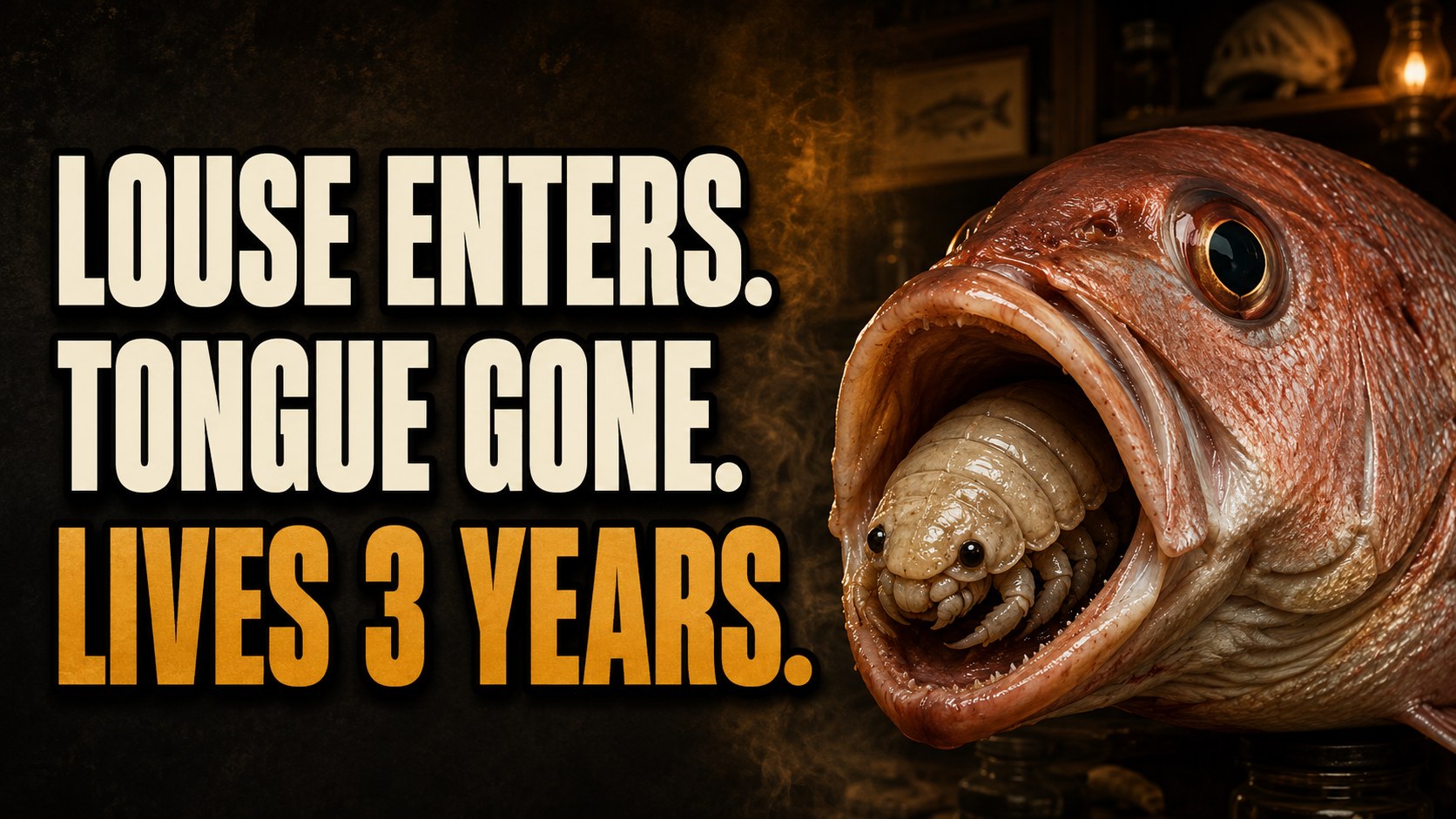
The Parasite That Replaces a Fish's Tongue: Cymothoa exigua
A small isopod off Costa Rica severs a snapper's tongue, waits for the tissue to die, and clamps itself into the socket for up to three years.
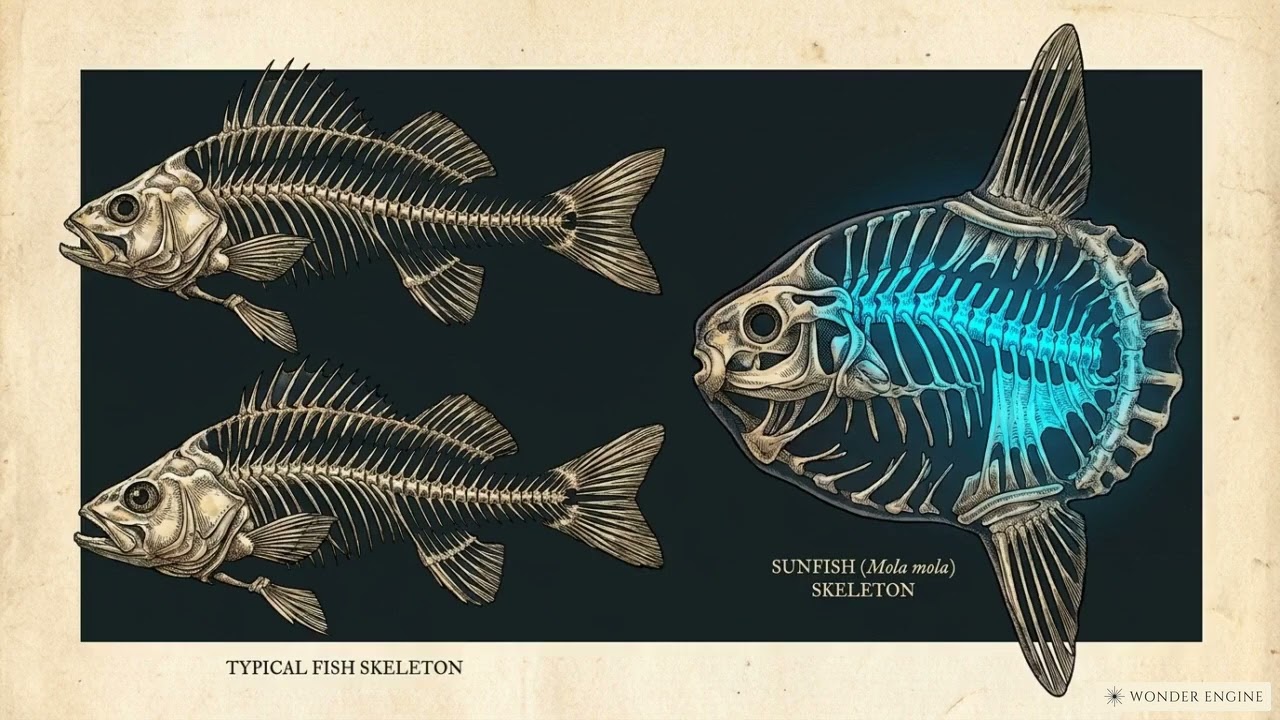
The Ocean Sunfish Releases 300 Million Eggs and Still Loses Ground
A single Mola mola female carries up to 300 million eggs, the highest fecundity in any vertebrate, yet the species is now listed as Vulnerable.
Why the Aye-Aye Taps Trees Eight Times a Second
The aye-aye survived being declared extinct in 1933. Today it is killed on sight in Madagascar for the very finger that keeps it alive.