
← Wonder EngineWonder no. 09Stranger beasts5min read
The Olm: A Century of Life in Total Darkness
The story behind the wonder.
The olm survives a century in pitch-black karst water, goes ten years without food, and flees light it cannot see.
Published
UTC
Reading time
5 min
~210 wpm
Word count
1,128
plain English
Category
Stranger beasts
stranger-beasts
In the limestone karst of Slovenia, a blind, pigment-poor salamander lives past a hundred years on water cold enough to numb a hand and meals that may arrive a decade apart.
A vertebrate running on standby
The olm, Proteus anguinus, occupies a stretch of biology most animals cannot reach. A study cited in Biology Letters estimates the average adult lifespan at 68.5 years, with documented maximums exceeding one hundred. Controlled laboratory conditions have shown the animal can survive up to ten years without food, an interval most vertebrates would not last weeks against. The body that carries this feat is small and unassuming: 20 to 30 centimetres long, occasionally reaching 40, snakelike, and almost completely without pigment. The yellowish-white to pink color of the skin gave it a folk nickname that has followed it through three centuries of writing, the "human fish."
That pale body lives in karst groundwater held to a remarkably steady 8 to 11 degrees Celsius, occasionally warming to 14. The olm is the only European cave-dwelling vertebrate, endemic to underground rivers flowing through Slovenia, southwestern Croatia, Bosnia and Herzegovina, and a small slice of northeastern Italy near Trieste. There is no terrestrial chapter to its life. By never leaving the dark, the species has, over evolutionary time, shed the biological costs of eyesight, pigment, and a normal adult body plan. What remains is a vertebrate built for stillness.
Neoteny, blind eyes, and skin that flees the light
The olm never finishes its metamorphosis. The condition is called neoteny, and it keeps two branched tufts of bright red external gills at the back of the head for the animal's entire life. The eyes, by contrast, go in the opposite direction. Larvae hatch with normal eyes, but those organs atrophy after about four months. Adult eyes are undeveloped and covered by a layer of skin, leaving the animal functionally blind. Charles Darwin singled this regression out in On the Origin of Species, describing the olm as an example of "reduction of structures through disuse."
And yet a blind olm will react decisively to a light source. The skin itself is photosensitive, carrying a pigment called melanopsin inside cells named melanophores, and an olm exposed to a bright environment will swim away. The same skin still has the latent ability to produce melanin, so a pale olm kept under light will gradually darken. Hunting and navigation rely on senses calibrated to the cave void. The olm tracks prey through ampullary organs that read faint electric fields in the water, and a 2002 study found it aligns its body with both natural and artificially modified magnetic fields. Its limbs carry an oddity that no other European amphibian shares: three toes on the forelimbs and only two on the hind feet.
The metabolism that consumes itself
What allows the ten-year fast is bookkeeping. When prey is abundant, the olm gorges on small cave crustaceans like Troglocaris shrimp, Niphargus and Asellus amphipods, and snails, swallowing each one whole without chewing. The nutrients are not burned off; they are stored as large deposits of lipids and glycogen inside the liver. When prey thins out, the metabolism is ratcheted down. In severe shortages the animal can reabsorb its own tissues to keep going. The result is a body that buffers good seasons against bad ones across spans most predators would not survive.
The same patience runs through reproduction. The olm breeds, on average, once every 12.5 years. A clutch holds 35 eggs typically and up to 70 at maximum, with each egg about 12 millimetres in diameter. Embryos develop for 140 days at 10 degrees Celsius, or as little as 86 days if the water reaches 15. Sexual maturity arrives only at about 14 years of age. The auditory range, 10 hertz to over 12,000 hertz with peak sensitivity between 1,500 and 2,000 hertz, suits a sensory life conducted by water rather than air.
The dragon, the name, and the eggs at Postojna
The written record of the olm begins in 1689, when the Carniolan naturalist Johann Weikhard von Valvasor reported, in Die Ehre deß Herzogthums Crain, that local people believed the pale creatures washing out of caves after heavy rain were the "offspring of a cave dragon." The scientific record begins in 1768, when Josephus Nicolaus Laurenti formally named the species Proteus anguinus. Slovenia placed the animal under legal protection in 1922, among the earliest cave fauna anywhere to be afforded that status. The olm later turned up on a Slovenian tolar coin, and Proteus, the country's oldest popular-science magazine, has been published under its name since 1933.
Captivity has supplied the only direct observation of olm reproduction. On 30 January 2016, a captive female at the Postojna Cave Vivarium Proteus laid more than fifty eggs and guarded them, an unusually committed parental behavior for a cave amphibian. Between late May and mid-July of that year, 22 baby olms hatched, and the event drew worldwide scientific attention. Postojna's official description calls the species "the largest troglodytic amphibian in the world." The cave itself is 24.34 kilometres long, with about 5 kilometres accessible to the public. The species now also supports one of the most ambitious sequencing efforts in zoology: the University of Ljubljana and BGI are mapping its roughly 50-gigabase genome, about 15 times the size of the human genome and currently the largest animal genome being sequenced.
A century to grow, a season to lose
Specialization at this depth comes with a narrow margin. A black-skinned subspecies, Proteus anguinus parkelj, was discovered in 1986 by the Slovenian Karst Research Institute. It is confined to a single karst basin smaller than 100 square kilometres near Črnomelj, carries 34 to 35 vertebrae against the nominate olm's 29 to 32, and has nearly functional eyes under transparent skin. The reach of the black olm, in other words, is the size of a small city's commuter belt.
A creature that breeds once in a dozen years, matures in fourteen, and lives in water it cannot easily leave is poorly equipped for sudden change. A single bad year of groundwater pollution in a karst aquifer can wipe out a localized population before it has another chance to spawn. The IUCN Red List, reassessed in 2024, classifies the olm globally as Vulnerable, and the Croatian population was assessed as Critically Endangered in 2020. The olm has persisted in European karst since the last ice age by matching the slow pace of its environment. Because of that match, a single season of disruption is enough to erase a population that took a century to grow.
Sources
// Sources · primary references
04 refs- Wikipedia: Olm (Proteus anguinus)en.wikipedia.org
- Wikipedia: Postojna Caveen.wikipedia.org
- Wikipedia: Johann Weikhard von Valvasoren.wikipedia.org
- IUCN Red List: Proteus anguinusiucnredlist.org
// More from Stranger beasts
See category →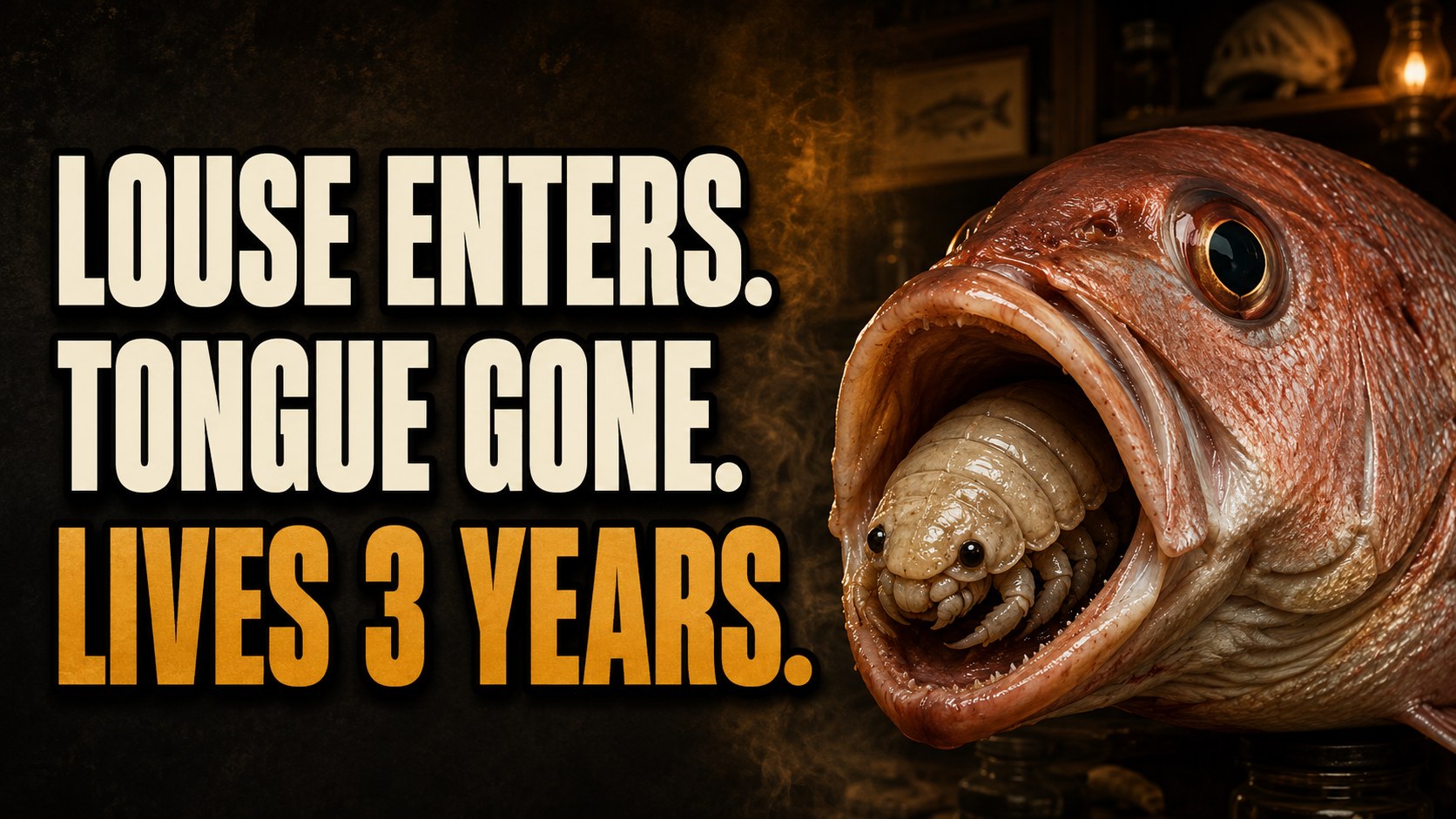
The Parasite That Replaces a Fish's Tongue: Cymothoa exigua
A small isopod off Costa Rica severs a snapper's tongue, waits for the tissue to die, and clamps itself into the socket for up to three years.
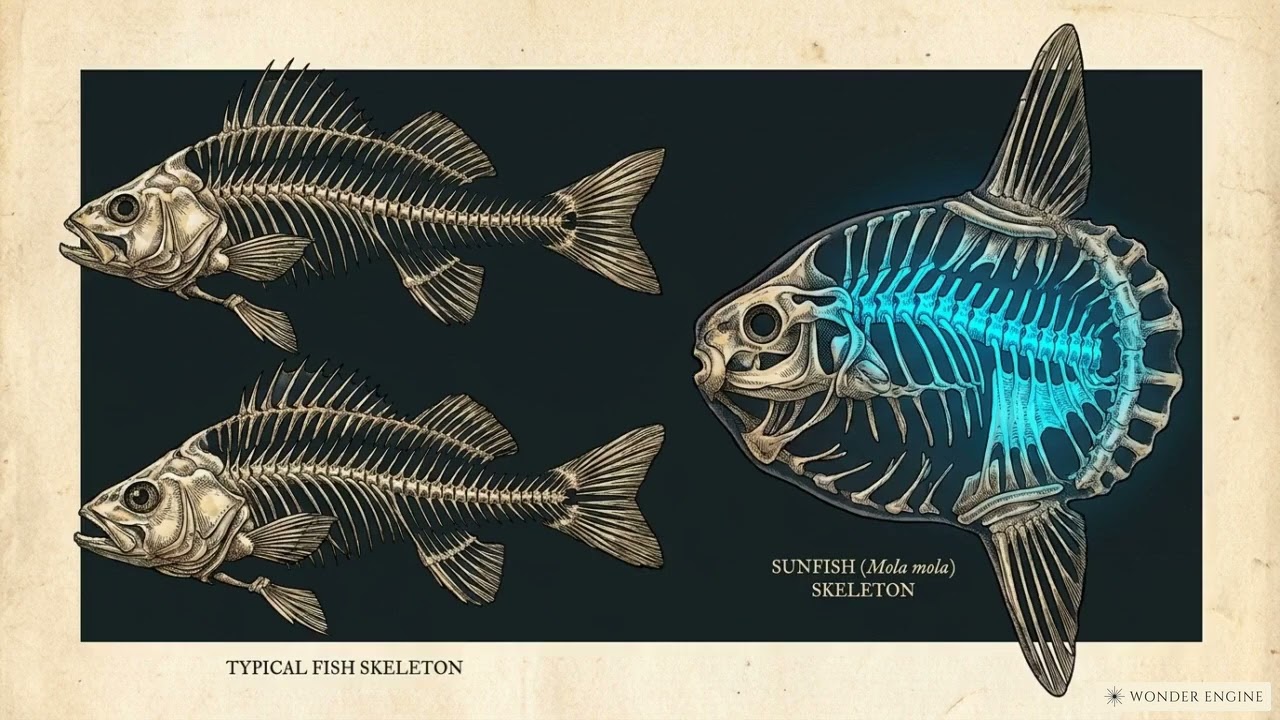
The Ocean Sunfish Releases 300 Million Eggs and Still Loses Ground
A single Mola mola female carries up to 300 million eggs, the highest fecundity in any vertebrate, yet the species is now listed as Vulnerable.

Why the Aye-Aye Taps Trees Eight Times a Second
The aye-aye survived being declared extinct in 1933. Today it is killed on sight in Madagascar for the very finger that keeps it alive.