
← Wonder EngineWonder no. 08Stranger beasts6min read
Why a Tardigrade Survived the Moon, and Cuts Human DNA Damage by 40%
The story behind the wonder.
A half-millimetre animal rode an Israeli probe into the Moon, and left behind a protein that now shields human DNA from radiation.
Published
UTC
Reading time
6 min
~210 wpm
Word count
1,243
plain English
Category
Stranger beasts
stranger-beasts
On 11 April 2019 at 19:23 UTC, an Israeli lunar probe named Beresheet struck Mare Serenitatis at roughly 140 metres per second, carrying thousands of dehydrated tardigrades sealed in epoxy resin between the nickel pages of a 30-million-page lunar library.
A crash, a cargo, and a question that lingered
Beresheet was a privately funded mission, built by SpaceIL and Israel Aerospace Industries and bankrolled by Morris Kahn. It launched on a SpaceX Falcon 9 on 22 February 2019 and reached lunar orbit on 4 April 2019. A week later, during the descent toward Mare Serenitatis, a gyroscope failure shut down the main engine and the craft struck the volcanic plain at roughly 140 metres per second, about 500 kilometres per hour, or 310 miles per hour.
The Arch Mission Foundation had loaded the lander with what it called a lunar library: roughly 30 million pages archived on thin nickel discs, samples of human DNA, and, between the digital layers, thousands of tardigrades dried into their dormant state and fixed in epoxy resin. In August 2019 the foundation publicly suggested those cryptobiotic animals might still be alive on the lunar surface. The story rippled out from there, picked up by every outlet that had ever run a "toughest animal on Earth" headline.
The hard answer came in May 2021. Follow-up research concluded that the specific physical forces of the Beresheet crash almost certainly exceeded survivable limits, and that the lunar passengers did not survive. What survived instead was the question the crash had forced into public view: how does an animal this small, this soft, and this anatomically simple even become a candidate for surviving a high-velocity collision with the Moon?
What a tardigrade actually is
Stripped of the headlines, the tardigrade is an unremarkable resident of damp places. The phylum Tardigrada contains roughly 1,500 described species across 160 genera and 36 families. Most adult tardigrades measure about 0.5 mm long, with the full size range running from 0.05 mm to 0.5 mm and the largest species reaching 1.3 mm. A single animal is built from only about 1,000 cells.
They are also old. Tardigrade-like fossils date to the Cambrian, roughly 500 million years ago, which puts the lineage among the oldest surviving animal groups on Earth. And they are everywhere. Tardigrades live in mosses, lichens, soil, leaf litter, freshwater ponds, glacial meltwater, and marine sediments, on every continent including Antarctica. A single square metre of mossy substrate can contain more than 2 million of them; ordinary soil samples routinely yield up to 300,000 per square metre.
Nothing in that profile reads like an extremophile. Half a millimetre long, a thousand cells, eight legs, and a habitat preference for whatever stays damp. The toughness is not in the anatomy. It is in what the anatomy does when the water goes away.
The tun, the sugar, and the disordered proteins
When a tardigrade's habitat dries out, the animal enters a state called cryptobiosis. It draws its legs in, contracts its body into a compact, barrel-shaped form known as a tun, and reorganises its chemistry from the inside. Water content drops to roughly 1 percent of normal. Measurable metabolism falls below 0.01 percent of the active rate. Active existence is traded for architectural stasis.
The trick is that water has a structural job inside a cell, not just a chemical one, and removing it normally causes membranes to collapse. Cells preparing for desiccation flood themselves with the disaccharide sugar trehalose and with a class of molecules called intrinsically disordered proteins. Together these lock into place where water used to sit and physically prop membranes apart. The cell is no longer running; it is held.
Held in that state, the tardigrade survives conditions that have no terrestrial analogue. Laboratory tests have recorded tuns enduring temperatures from −272 °C, within one degree of absolute zero, up to +149 °C for short periods. Tuns have survived laboratory exposure to about 1.14 gigapascals, roughly 165,000 pounds per square inch, which is more than ten times the pressure at the bottom of the Mariana Trench. Gas-gun experiments have recorded tun-state tardigrades surviving impact velocities up to roughly 900 metres per second. Following rehydration, the animals reanimate.
Earth does not produce environments at absolute zero or gigapascal pressures on its own. The capacity to endure them is, in the strictest sense, surplus. It is something the lineage carries without ever needing on its home planet.
A vacuum experiment and a transplanted gene
In September 2007, the European Space Agency's FOTON-M3 capsule carried Milnesium tardigradum and Paramacrobiotus richtersi into low Earth orbit aboard the BIOPAN-6 platform for the TARDIS experiment. The animals were left exposed to the vacuum of space for 10 days. In the TARSE arm of the experiment, more than 68 percent of specimens shielded from solar ultraviolet "were reanimated within 30 minutes following rehydration," and many of the survivors later laid viable eggs. In the fully exposed TARDIS arm, three Milnesium tardigradum specimens survived the combination of vacuum and full-spectrum solar ultraviolet. They were the first known animals to live through open-space exposure. In 2011, dehydrated tardigrades flew again on Space Shuttle Endeavour's STS-134 mission and recovered after exposure to microgravity and cosmic radiation aboard the International Space Station.
The molecular reason is, at least in part, a single nuclear protein. Tardigrades carry a tardigrade-unique protein called Dsup, short for damage suppressor, which physically wraps around chromosomal DNA and shields the nucleosomes from the hydroxyl radicals produced by ionising radiation. The Dsup gene was identified by Takuma Hashimoto and Takekazu Kunieda of the University of Tokyo, working on Ramazzottius varieornatus, and reported in Nature Communications in September 2016 under the title "Improved radiotolerance of human cultured cells by tardigrade-unique protein."
The title says what the paper did. The researchers inserted the Dsup gene into cultured human HEK293 kidney cells. The transgenic human cells suffered roughly 40 percent less X-ray-induced DNA damage than control cells, and continued to proliferate after exposure. The gene moved across half a billion years of evolutionary distance, into a cell line from a completely different kingdom of the tree of life, and still functioned.
The paradox the crash left behind
Beresheet's impact velocity, about 140 metres per second, was well below the 900 metres per second that tun-state tardigrades have survived in controlled gas-gun experiments. That is why the early speculation was not absurd on its face. The 2021 follow-up did not overturn the gas-gun work; it argued that the actual forces of the Beresheet impact, with its specific geometry and the structural failure of the spacecraft around the cargo, exceeded what the animals could absorb. The headline survived the rebuttal anyway, because the underlying story does not need the Moon to land.
A creature smaller than a grain of salt, made of about a thousand cells, can shut its metabolism to less than one part in ten thousand and ride out the vacuum of low Earth orbit. It carries, in a single nuclear protein, a defence against ionising radiation that can be lifted out of its genome, dropped into cultured human cells, and cut their X-ray DNA damage by about 40 percent. The lunar passengers did not survive. The genetic invention they came from already has.
Sources
// Sources · primary references
05 refs- Wikipedia: Tardigradeen.wikipedia.org
- Wikipedia: Cryptobiosisen.wikipedia.org
- Wikipedia: Tardigrades in spaceen.wikipedia.org
- Wikipedia: Beresheeten.wikipedia.org
- Hashimoto et al., Nature Communications, 2016nature.com
// More from Stranger beasts
See category →
The Parasite That Replaces a Fish's Tongue: Cymothoa exigua
A small isopod off Costa Rica severs a snapper's tongue, waits for the tissue to die, and clamps itself into the socket for up to three years.
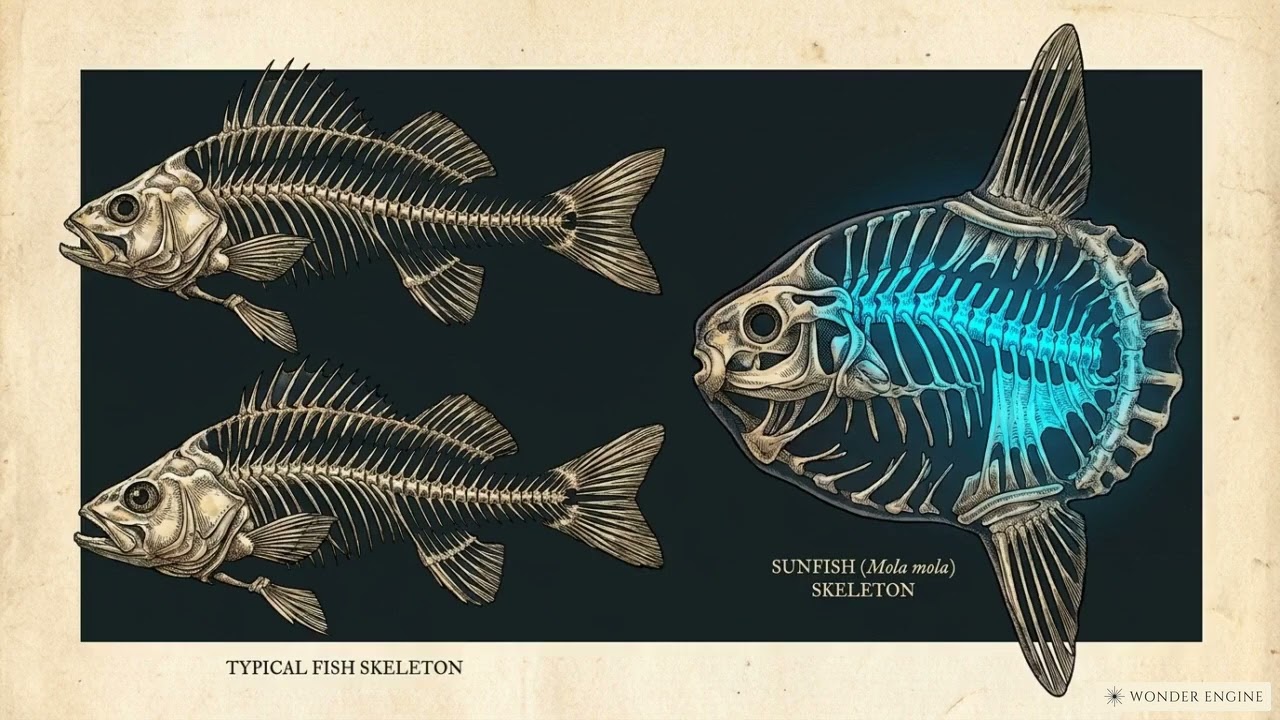
The Ocean Sunfish Releases 300 Million Eggs and Still Loses Ground
A single Mola mola female carries up to 300 million eggs, the highest fecundity in any vertebrate, yet the species is now listed as Vulnerable.

Why the Aye-Aye Taps Trees Eight Times a Second
The aye-aye survived being declared extinct in 1933. Today it is killed on sight in Madagascar for the very finger that keeps it alive.