
← Wonder EngineWonder no. 10Stranger beasts6min read
Why the Platypus Lays Eggs, Hunts Blind, and Carries Venom That Morphine Cannot Touch
The story behind the wonder.
A mammal that lays eggs, hunts blind by electric sense, and delivers venom from its hind ankles that hospital morphine cannot touch.
Published
UTC
Reading time
6 min
~210 wpm
Word count
1,216
plain English
Category
Stranger beasts
stranger-beasts
A male platypus is a mammal that delivers venom from a hollow keratin spur on the inside of each hind ankle, and the pain it produces can last for months without responding to morphine.
A weapon on the ankle
The spur sits on the inside of each hind ankle, hollow and made of keratin, and it pivots. According to the Wikipedia article on platypus venom, the spur can rotate to a right angle relative to the limb, which gives the male a wider arc of attack than a fixed structure could allow. A duct runs from the spur up to the crural gland, a kidney-shaped alveolar gland embedded in the thigh. That gland produces venom mainly during the mating season, which is one of the strongest pieces of evidence that the spurs evolved as weapons used between competing males rather than as a defence against predators.
The clinical consequences in humans are documented, and they are unusually severe for an animal that is not lethal. In 1991, Keith Payne, an Australian Army Victoria Cross recipient, was struck by a platypus spur, and he described the pain as worse than being struck by shrapnel. A 1992 clinical report on a platypus envenomation patient noted that the pain "did not respond to morphine." The Wikipedia article on platypus envenomation, summarising published case reports, describes how "starting from the wounded area, the affected limb develops edema… which can lead to an excruciating hyperalgesia… that can last as long as months."
The biochemistry behind that pain is unusual on its own terms. The venom contains at least nineteen identified peptides, including three named families: defensin-like peptides known as OvDLPs, C-type natriuretic peptides known as OvCNPs, and a nerve growth factor known as OvNGF. The defensin-like peptides arrived in the venom by convergent evolution, repurposed from β-defensin genes the immune system already used to fight bacteria and viruses. And one component reported by Torres and colleagues in 2002 is, so far, the only documented case of a D-amino acid in a mammalian system. Female platypuses are born with spur buds, but those buds drop off before the end of their first year, and adult females carry no functional crural gland.
A freshwater range, hunted in the dark
The species lives only within the freshwaters of eastern Australia, from Queensland in the north south to Tasmania, including King Island. It has been a protected species in every Australian state since 1912, a status that long predates the modern conservation framework now applied to it.
What the platypus does in those rivers is, again, not what a mammal is expected to do. When it dives, it closes its eyes, its ears, and its nostrils. It hunts entirely in the dark. The instrument it uses instead is its bill, a soft leathery organ studded with about 40,000 electroreceptors arranged in front-to-back stripes along the skin. Those receptors register the faint electric fields produced by the muscle contractions of prey on the river bed. The animal scans with short side-to-side head movements called saccades, and combines the electric signal with pressure sensors in the bill to triangulate the distance to a target. Its dives average 35 seconds underwater, separated by surface intervals of about 13 seconds. There is no equivalent sense in any placental mammal. The closest analogues sit in the world of fish.
Eggs, milk, and an open-skin nursery
The reproductive story is similarly off-template. The platypus is one of only five surviving species of monotreme, the mammals that lay eggs instead of giving birth to live young. Females typically lay two small, leathery eggs, each about 17 millimetres long, closer in size and texture to a reptile's egg than to a bird's. The eggs develop inside the mother for about 28 days, then incubate externally for another 10 days while she curls around them in a burrow. Newly hatched young are blind and hairless, and a remnant yolk sac inside them disappears within four days of hatching.
Then comes the part that does not appear in any standard description of mammalian nursing. The platypus has no teats. Milk is secreted directly through pores in patches of skin on the mother's belly, and the young lap it from her fur. The skin is, in effect, the dish. To protect young that are feeding through an open-skin interface, monotreme milk carries a highly expressed antibacterial protein not found in other mammals. The young remain in the natal burrow for about four months, emerge at roughly 67 percent of adult weight, and are nearly weaned within five days of leaving it.
A genome from before the modern mammal
The platypus genome was first sequenced and published in the journal Nature in May 2008, with a more complete version released in 2021. What that sequence shows is a mammalian lineage assembled differently from every other surviving mammal. The platypus carries ten sex chromosomes, five XY pairs in males, where nearly every other mammal carries a single pair. The genome lacks the standard mammalian sex-determining gene SRY. Sex appears to be determined instead by the AMH gene on the oldest of its Y chromosomes. One of the platypus's X chromosomes is genetically homologous to the Z chromosome of birds, which is taken as evidence that the mammalian sex chromosome system was assembled after the monotreme lineage broke away.
The architecture of its body carries the same imprint. The adult platypus has no functional stomach. Its ancestors lost the genes that produce pepsin, the protein-digesting enzyme. Its average body temperature is about 32 degrees Celsius, roughly five degrees lower than the 37 degree average found in placental mammals. An adult male averages 50 centimetres in length and 1,700 grams in weight, while an adult female averages 43 centimetres and 900 grams. Captive platypuses have lived up to 30 years, and wild individuals have been recaptured at 24 years old. The platypus and echidna lineages diverged from each other an estimated 19 to 48 million years ago.
In 2020, researchers reported one further anomaly. Platypus fur biofluoresces under ultraviolet light, glowing cyan and green, a property never before documented in monotremes.
The contradiction is the species
The platypus is not a collection of curiosities stapled together. Every one of these facts lives in the same animal. A mammal lays leathery eggs and sweats milk through bare skin. The same mammal seals its face shut underwater and hunts by electric field. The same mammal carries a venom hospital morphine cannot touch, ten sex chromosomes, no SRY gene, no stomach, no teeth, and a body temperature five degrees below ours.
The implication runs only one way. The platypus lineage broke off from the rest of the mammalian class before the mammalian template was finished, and it kept going. Its genome, sequenced in 2008 and refined in 2021, reads as a record of that other route. The IUCN listed the platypus as near threatened in 2016, and in November 2020 it was recommended for reclassification to threatened. The strangest mammal on Earth, on a planet that has had this kind of mammal for tens of millions of years, is also one of the easiest to lose.
Sources
// Sources · primary references
04 refs- Wikipedia: Platypusen.wikipedia.org
- Wikipedia: Platypus venomen.wikipedia.org
- Wikipedia: Monotremeen.wikipedia.org
- Wikipedia: Electroreception and electrogenesisen.wikipedia.org
// More from Stranger beasts
See category →
The Parasite That Replaces a Fish's Tongue: Cymothoa exigua
A small isopod off Costa Rica severs a snapper's tongue, waits for the tissue to die, and clamps itself into the socket for up to three years.
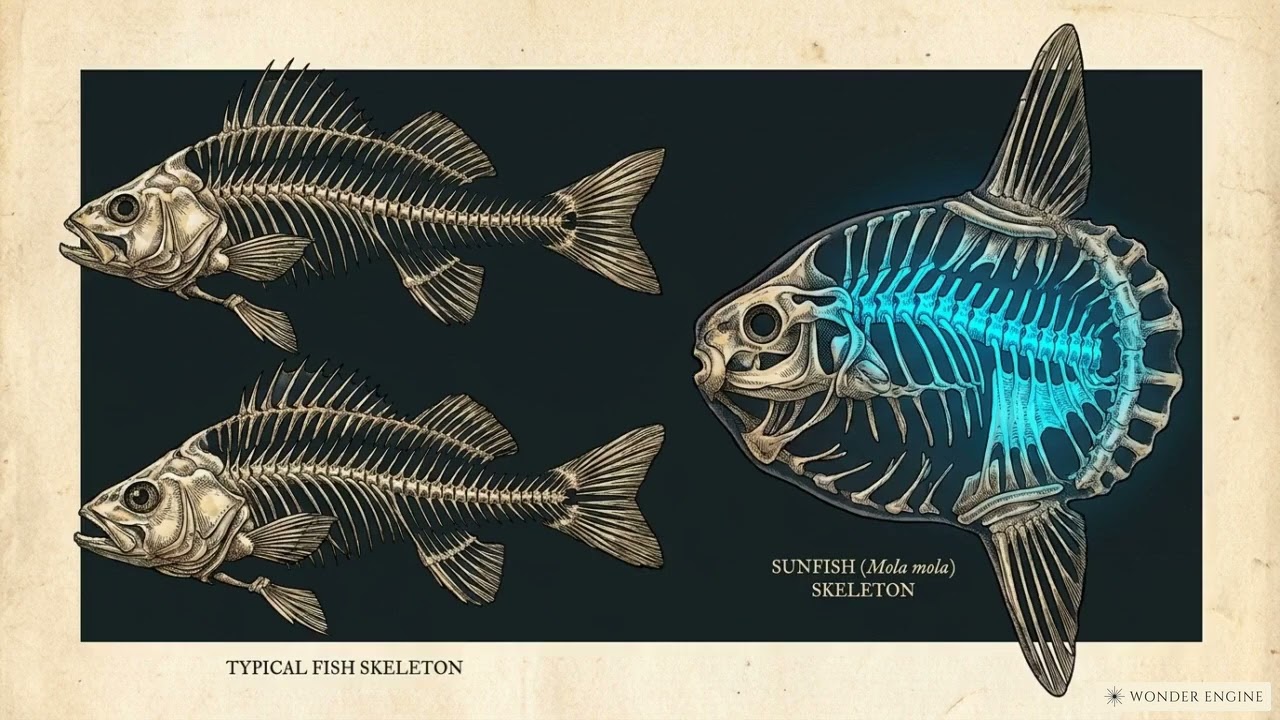
The Ocean Sunfish Releases 300 Million Eggs and Still Loses Ground
A single Mola mola female carries up to 300 million eggs, the highest fecundity in any vertebrate, yet the species is now listed as Vulnerable.

Why the Aye-Aye Taps Trees Eight Times a Second
The aye-aye survived being declared extinct in 1933. Today it is killed on sight in Madagascar for the very finger that keeps it alive.