
← Wonder EngineWonder no. 01Stranger beasts6min read
Why Axolotls Never Grow Up, and Regrow Their Own Brains
The story behind the wonder.
The axolotl regrows its limbs, spine, and brain without scarring. It is also nearly extinct in the only canal system where it naturally lives.
Published
UTC
Reading time
6 min
~210 wpm
Word count
1,253
plain English
Category
Stranger beasts
stranger-beasts
The animal whose biology we are mining for the secrets of human healing is also the animal we are erasing from the only place on Earth it naturally lives.
A salamander that refuses to leave the water
The axolotl, Ambystoma mexicanum, is a salamander native to a single lake system: Xochimilco, in southern Mexico City. The tree-lined canals that thread through the southern edge of the metropolis are the surviving fragment of a much larger pre-colonial lake. They are the only place on the planet where wild axolotls have ever lived.
In that native habitat, the wild axolotl is a mottled olive-brown animal moving through shallow, dark water. It is unobtrusive. It does not climb out, and it does not develop the dry skin and air-breathing lungs that almost every other salamander species eventually acquires. The pink, leucistic, and albino strains that have become the global face of the species only arose in captivity. They are not what the canals look like.
What the axolotl does instead of growing up is keep being a larva. It retains its finned tail, its fully aquatic life, and the prominent feathered external gills that fringe its head. This developmental holdover has a name. It is called neoteny, and it is a strict program rather than a quirk. The axolotl arrests its own physical maturation and never undergoes metamorphosis. Most other salamander species eventually lose their gills, develop lungs, and climb out of the water to live on land. The axolotl simply stays behind.
That permanent juvenile state is not a curiosity bolted onto an otherwise ordinary salamander. It appears to be the substrate on which the second, more famous feature of the animal rests.
The biology that should not be possible
If an axolotl loses a limb, the wound does not merely close. Over the course of 40 to 50 days, the animal completely regrows muscle, blood vessels, nerves, and skin down to the exact original number of digits, with perfect anatomical fidelity. The replacement is functional. The replacement is correct. And the entire process happens without scarring; the missing feature is formed cleanly, matching the original.
The capacity does not stop at limbs. The axolotl regenerates severed spinal cord, torn heart muscle, retinal tissue, and large portions of its brain. It does this throughout its full lifespan, which in well-kept captivity runs 10 to 15 years. Most regenerative animals lose this ability shortly after early development. The axolotl does not. As researchers who study regeneration broadly conclude, it is the only species of vertebrate known to regenerate so much of its body, and to do so over its entire lifespan.
The molecular apparatus underneath this is large in a very literal sense. The axolotl genome was fully sequenced in 2018. It contains approximately 32 billion base pairs, roughly ten times the size of the human genome, which sits at about 3.2 billion base pairs. It is among the largest animal genomes ever sequenced. The sheer scale is part of why the project took as long as it did, and part of why the work of locating the specific machinery for scar-free healing inside that genetic code is still in progress.
That work is the real reason axolotls have become a fixture in research institutions worldwide. Labs are isolating the genes that govern the formation of the limb blastema, the cluster of cells that rebuilds a missing limb, in the hope that the same logic can one day be translated into human wound healing and anti-scarring therapy. The translation is not close. It is decades away if it happens at all. But the animal is what the field has.
A god, a 19th-century lab, a model organism
The axolotl arrived in modern science with a name that already carried a story. In Aztec mythology it is named for the god Xolotl, the twin of Quetzalcoatl. Fearing sacrifice, Xolotl fled into the water and transformed into a salamander to hide. The name is sometimes translated as water-dog, water-monster, or water-twin.
It entered Western science directly in 1865, when a few dozen Mexico City specimens were shipped to the French biologist Auguste Duméril in Paris. Duméril altered the environmental conditions in his lab and induced metamorphosis in some of his specimens, proving that the axolotl was developmentally a juvenile salamander rather than a separate adult form. That single experiment is the origin of the term neoteny as it applies to this animal, and the captive lineages that descend from those 1860s specimens are the ancestors of most of the lab populations alive today.
The arc from there is unusual. A creature that began in cultural memory as a water god hiding from death became a 19th-century curiosity, and is now firmly established as a modern scientific model. The same animal, in three different intellectual frames, depending on which century you ask.
The paradox in Xochimilco
The animal that survived being a god, a French experiment, and a century and a half of scientific scrutiny is now disappearing from the only place it has ever naturally been.
As Mexico City expanded, the native canals of Xochimilco were degraded by urban runoff, severe water pollution, and habitat fragmentation. Compounding the pollution is the introduction of invasive predator fish, specifically carp and tilapia, which hunt the remaining amphibians in their isolated pockets of water. The genetic traits that allow an axolotl to rapidly regrow a severed heart offer no protection against an ecologically destroyed habitat.
The numbers track the collapse. A 2014 IUCN survey estimated a density of just 35 axolotls per square kilometer in Xochimilco. Some ecological surveys in 2020 found zero axolotls in entire canal transects where they had been recorded just years earlier. The most recent estimates indicate fewer than 1,000 wild individuals remain in their native canals.
Luis Zambrano, the lead conservation researcher at the Universidad Nacional Autónoma de México (UNAM), has stated the reality in interviews on the wild collapse: "We are losing a creature that has survived for millions of years, in just a few decades."
The contradiction is hard to step past. Captive populations are thriving across research labs around the world. Pale pink leucistic and albino axolotls are sold in pet stores on three continents. Some research colonies number in the thousands. At the same time, in the canals where every one of those animals ultimately traces its ancestry, surveys are starting to come back empty. Humanity is studying the axolotl's biology to learn how to heal itself, while simultaneously erasing the only ecosystem the species has ever inhabited.
Sitting with what the animal is
It is tempting to resolve that paradox into a tidy lesson, and the axolotl does not really permit it. It is not immortal. It lives, in captivity, 10 to 15 years. Its biology has not made it invulnerable, only strange. And the gap between what we admire about it in a glass tank and what we tolerate about its decline in Xochimilco is not closed by the same molecular work that is making it famous in journals.
What the axolotl asks of a reader is patience with the contradiction. A god in one cultural memory, a juvenile in developmental biology, a model organism in regenerative medicine, and a vanishing animal in the canals of southern Mexico City. All of those, at once, in the same small salamander breathing through feathered gills in shallow green water.
Sources
// Sources · primary references
02 refs- Wonder Engine on YouTubeyoutube.com
- Video: Why Axolotls Never Grow Upyoutube.com
// More from Stranger beasts
See category →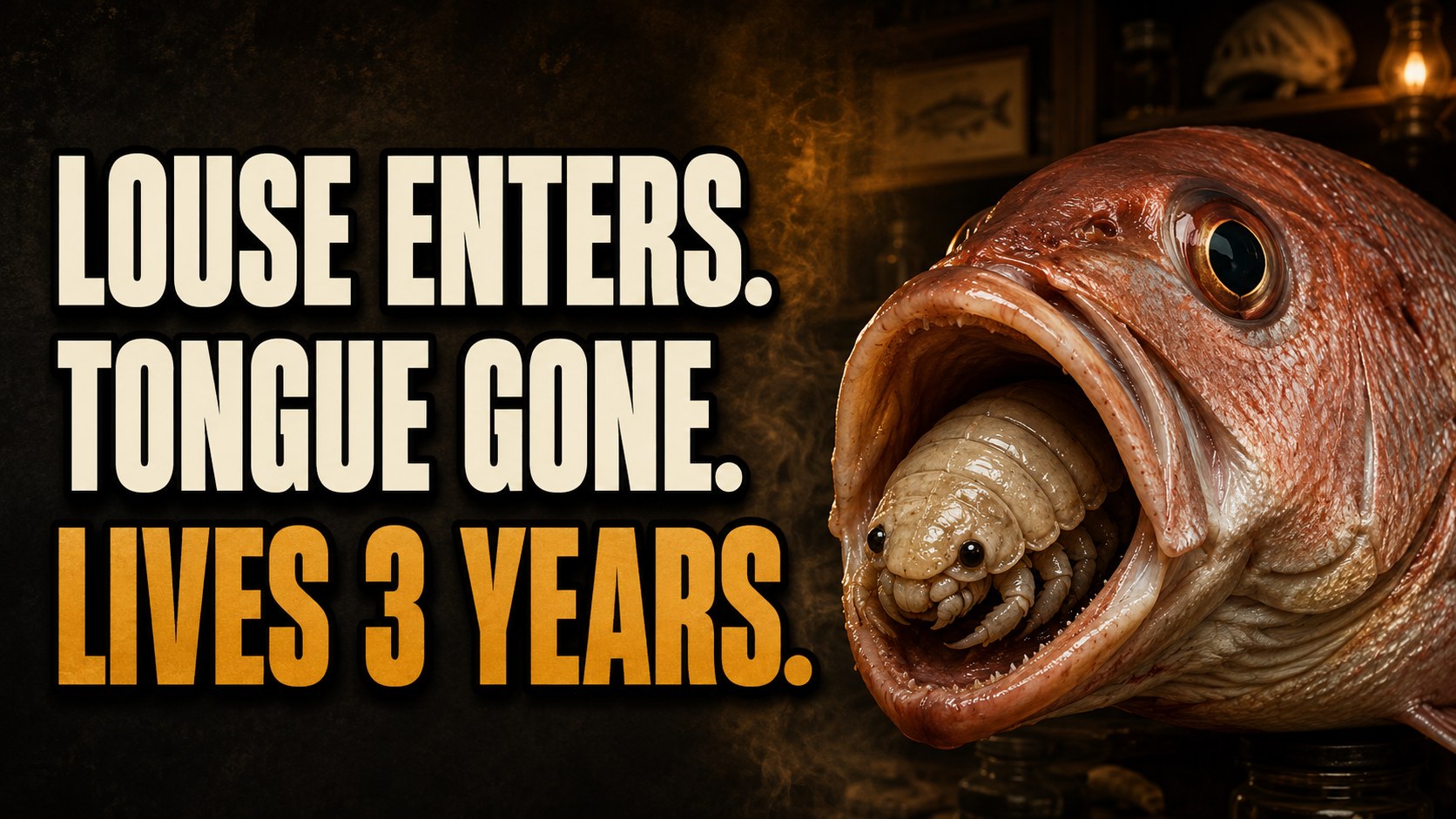
The Parasite That Replaces a Fish's Tongue: Cymothoa exigua
A small isopod off Costa Rica severs a snapper's tongue, waits for the tissue to die, and clamps itself into the socket for up to three years.
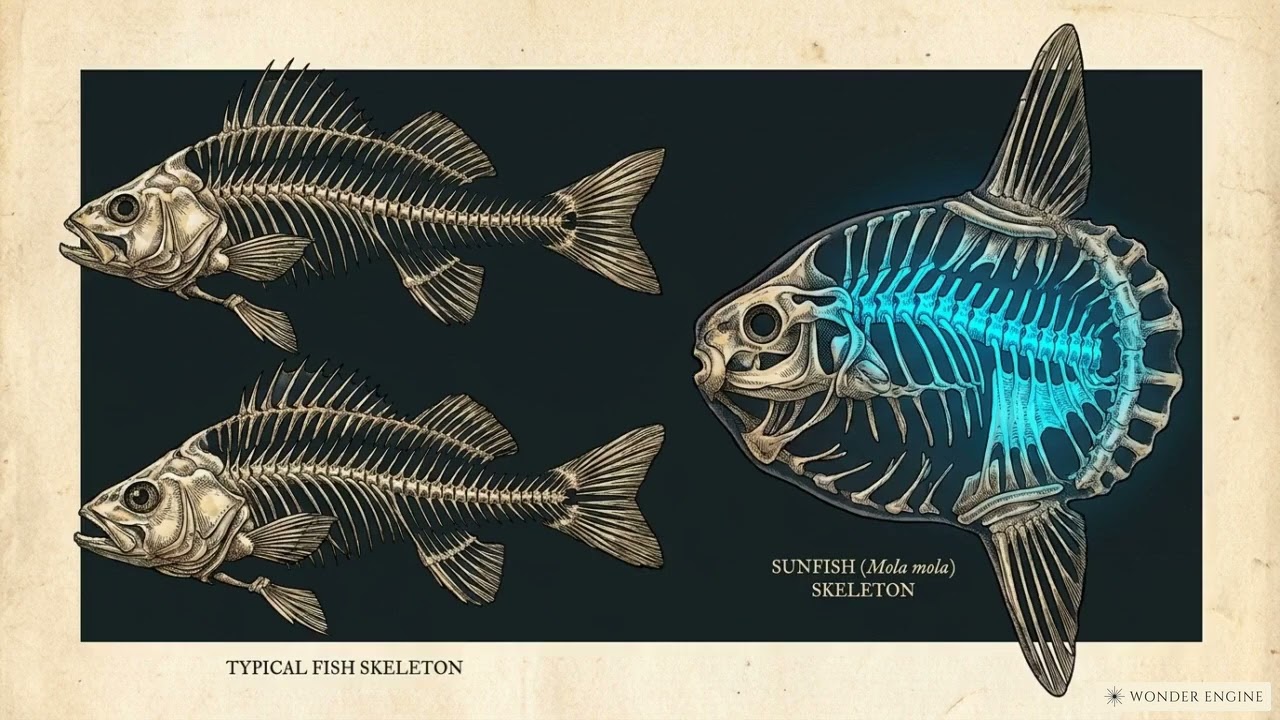
The Ocean Sunfish Releases 300 Million Eggs and Still Loses Ground
A single Mola mola female carries up to 300 million eggs, the highest fecundity in any vertebrate, yet the species is now listed as Vulnerable.

Why the Aye-Aye Taps Trees Eight Times a Second
The aye-aye survived being declared extinct in 1933. Today it is killed on sight in Madagascar for the very finger that keeps it alive.